 Blackjack Strategy Trainer 21
Splitting means separating a pair
When your first two cards are a pair, blackjack lets you split them into two hands. You add a second bet equal to your first bet, the dealer separates the cards, and each card starts a new hand. From there, each hand is played normally against the dealer.
Example: you bet $10 and receive 8,8. If you split, you place another $10. One 8 starts the first hand and the other 8 starts the second hand. You now have $20 in action, but you no longer have a hard 16.
Why splitting exists
Some pairs are terrible together and strong apart. Two aces together are either 2 or 12, both poor starts. Split apart, each ace starts at 11 and has a strong chance of making 21 with a ten-value card. A pair of 8s is hard 16, one of the worst hands in blackjack. Split apart, each 8 becomes playable.
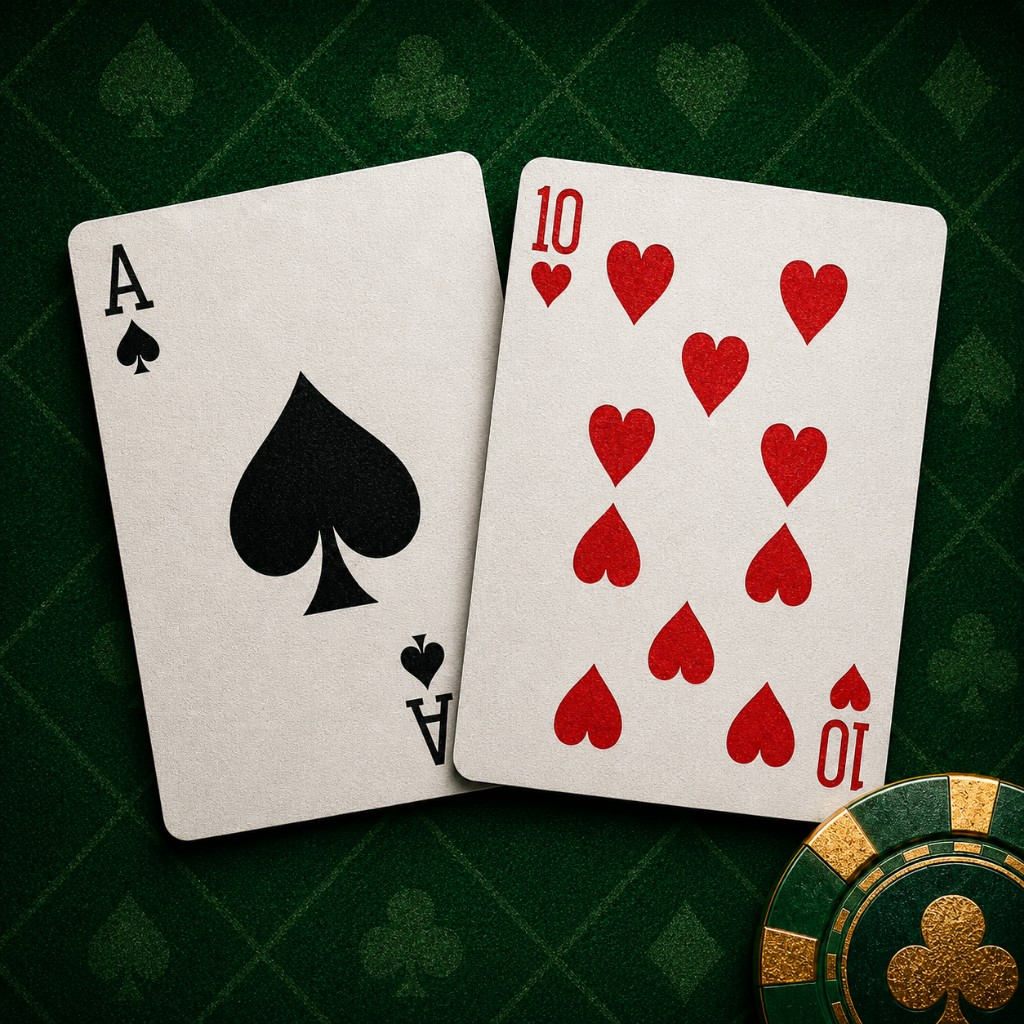
Other pairs are strong together and should stay together. Two 10s make 20, which wins most of the time. Splitting 10s gives up a great hand to create two merely decent hands.
Simple examples
| Hand | What splitting does | Correct basic-strategy idea |
|---|---|---|
| A,A | Turns soft 12 into two hands starting at 11 | Always split |
| 8,8 | Escapes hard 16 | Always split unless a special surrender rule overrides |
| 10,10 | Breaks up a 20 | Never split under basic strategy |
| 5,5 | Breaks up hard 10 | Never split; play it as hard 10 |
Splitting is not always aggressive
New players often think splitting is a way to chase more money. That is the wrong frame. Sometimes splitting is aggressive, as with A,A. Sometimes it is defensive, as with 8,8 against a dealer 10, where you still expect to lose money but less than if you played hard 16 as one hand.
The key is expected value. Splitting is correct when two separate hands perform better than the original paired total after accounting for the extra bet.
What to learn next
Once the meaning is clear, the strategy is a small chart. Always split A,A and 8,8. Never split 10,10 or 5,5. Then memorize the middle pairs: 9,9, 7,7, 6,6, 4,4, 3,3, and 2,2.